Smart Bag vs GPS Tracker Tag: Which Actually Gets Your Bag Back?
2026-11-09
A tag protects the bag's location; a biometric bag protects its contents — and both layers now ship in one product. A buyer's comparison for retailers and brand owners, with the theft-versus-loss distinction that decides the sale.
Looking for this in bulk or with your brand?
OEM branding, 24h reply, free evaluation units for qualified buyers.
A tracker tag tells you where your bag probably is. A biometric smart bag controls who can open it — and also tells you where it is. That is the honest one-line answer, and this guide unpacks it: how the two approaches behave when a bag is stolen versus merely lost, what each costs to run, and why brands are putting both layers into one product.
Theft Is Not Loss — and They Need Different Answers
Bags go missing in two distinct ways:
Loss — you left it in a taxi, at the café, at the airport lounge. Nothing was stolen; the bag is simply somewhere else. A tracker tag solves this well: the crowdsourced Find My network shows you where it is, and you go and get it.
Theft — someone took the bag deliberately, and the first thing a professional thief does with a tagged bag is remove or discard the tag. The tag did its job for ten minutes; the contents — laptop, wallet, documents — are gone because nothing stopped the bag from being opened.
That asymmetry is the whole comparison in one paragraph: a tag protects the bag's location; a biometric bag protects the bag's contents.
What a Tracker Tag Actually Does
- Reports approximate location through a crowdsourced network (Apple Find My) or its own GPS plus cellular connection
- Costs little — a tag is the cheapest tracking layer that exists
- Runs for months on a replaceable battery
- Depends on being attached and kept — it is a separate object that can fall off, be removed, or run flat unnoticed
- Offers zero control over the bag itself: anyone can still unzip it in three seconds
What a Biometric Smart Bag Actually Does
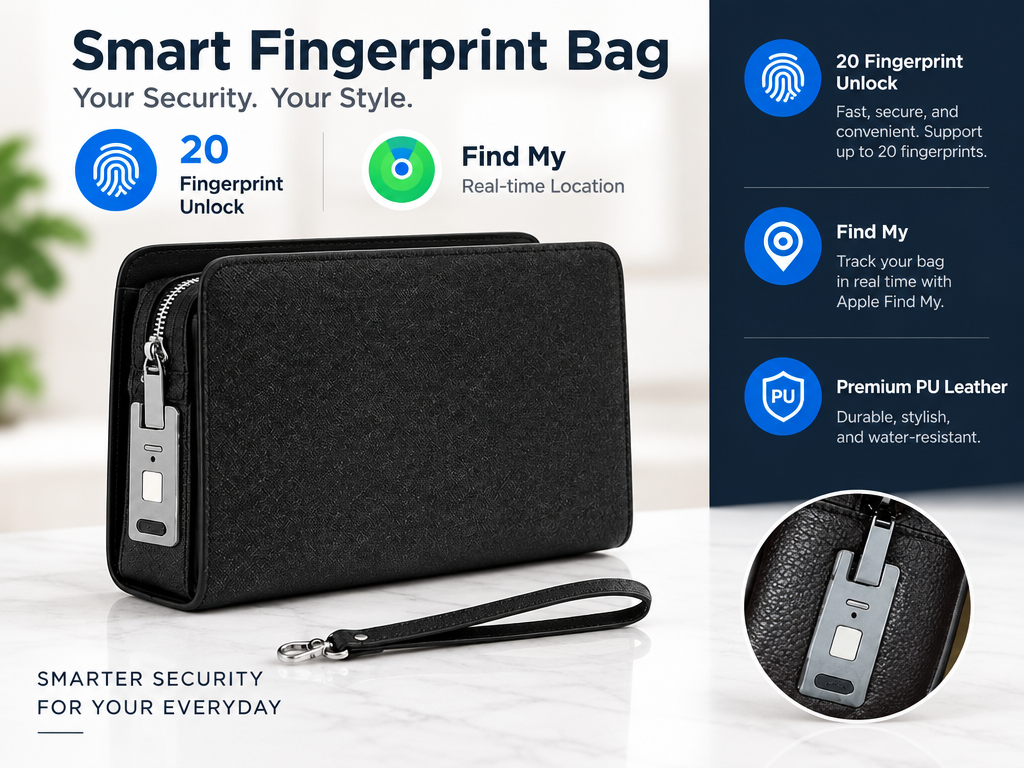
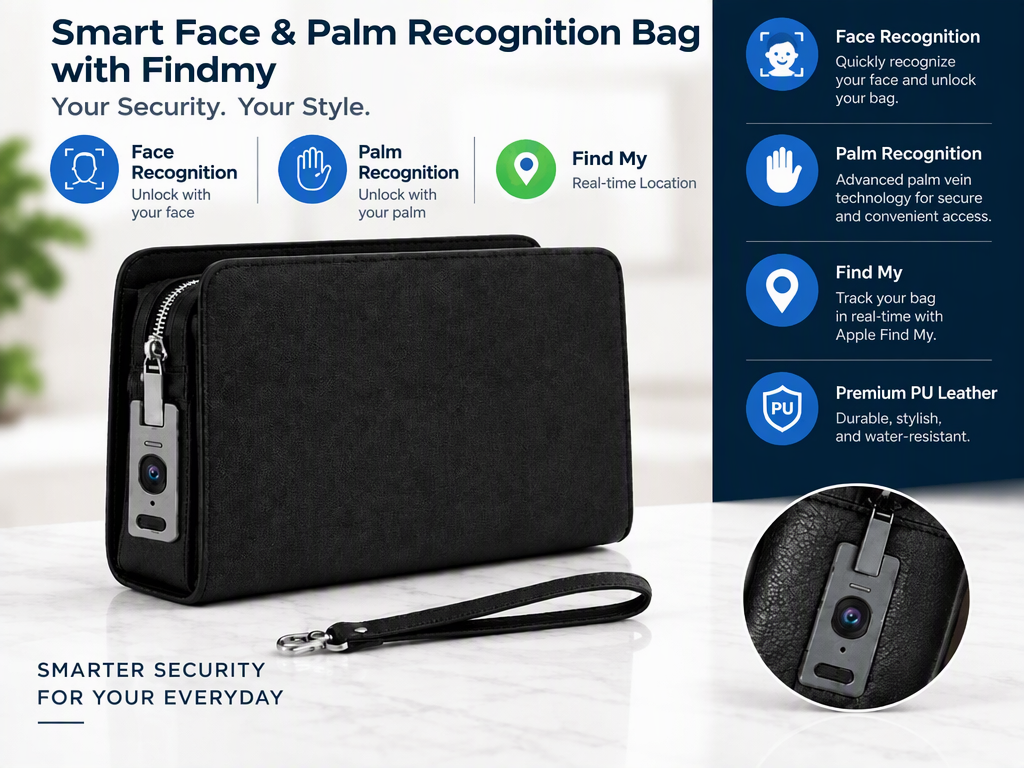
- Locks the contents behind a biometric credential — fingerprint with a 0.3 s unlock, or face and palm recognition on the flagship line, with palm-vein false acceptance below 0.0001%
- Locates through the Apple Find My network — the module is built into the bag, MFi certified, and cannot be removed without destroying the bag
- Logs access — enrolled users and timestamps, with manager mode controlling who can add users
- Warns before the battery dies — months of standby per USB-C charge, with low-battery alerts in the companion app
Side-by-Side Comparison
| Question | Tracker tag | Biometric smart bag |
|---|---|---|
| Finds a lost bag | Yes — crowdsourced network | Yes — Find My module built in |
| Stops someone opening it | No | Yes — fingerprint / face / palm |
| Can be removed by a thief | Yes — it is an accessory | No — it is the bag |
| Requires correct fitting | Yes — placement matters | Engineered in at the factory |
| Recurring cost | None (Find My) or a SIM plan (GPS tag) | None — no subscription |
| Access log | No | Yes — identity + timestamp |
| Retail story | "Find your keys" | "Your bag, your fingerprint, your data stays on the device" |
| Price positioning | Accessory pricing | Premium product pricing |
Why Brands Ship Both Layers in One Product
The layers are complementary, not competing:
1. The Find My layer answers "where is it" — globally, anonymously, end-to-end encrypted, with no subscription. 2. The biometric layer answers "who opened it" — and unlike a tag, the credential cannot be peeled off in a toilet stall.
This is why the category is moving from "bags with a tracker pocket" to bags with tracking and biometrics engineered into the product: one product, one warranty, one retail story — and the tag can no longer be separated from the thing it protects. For the privacy angle that closes retail sales, see our guide on where biometric bag data actually lives.
What Retail Buyers Should Check Before Stocking Either
For a tag: network coverage in your market — Find My needs Apple device density, GPS tags need cellular plans — plus battery replacement and the fact that it protects nothing once removed.
For a biometric bag: which biometric fits your price point (fingerprint for volume lines, face and palm for premium), where the templates are stored (on-device is the only acceptable answer), MFi certification for the Find My module, and locked-when-dead-battery behaviour.
OEM Notes for Brand Owners
Yooga Smart manufactures biometric smart bags in Shenzhen — the fingerprint line and the face-plus-palm flagship — with Apple MFi Find My certification, on-device template storage and USB-C rechargeable batteries. For a wider comparison of the two bag lines, see our face-and-palm vs fingerprint buyer's guide. OEM support covers logo, colors, packaging and app branding, with samples before bulk orders.
Frequently Asked Questions
Is a tracker tag enough to protect a bag?
For losing a bag by accident, yes — it is the cheapest way to find it again. For theft, no: the tag is removed in seconds and the bag opens just as fast. Real protection needs the lock built into the bag itself.
Does a biometric bag still need a tracker?
The Find My module is already built into the bag — no separate tag needed. The biometric layer adds what no tag can: control over who opens it.
Can a thief just cut the bag open?
A determined attacker with a knife defeats most soft goods. The biometric layer stops the opportunistic majority of theft — bag left on a chair, opened in a crowd, unzipped on transit — which is where nearly all real losses happen.
Does the smart bag need a subscription?
No. The Find My network carries no fee and the biometric unlocking runs entirely on the device. There is no SIM and no monthly plan.
Which biometric should a first bag line use?
Fingerprint for volume lines — lowest cost, smallest module, users already understand it. Face and palm for the premium flagship — contactless, glove-friendly, and the strongest anti-spoofing story at retail.
Looking for this in bulk or with your brand?
OEM branding, 24h reply, free evaluation units for qualified buyers.
More from Apple Find My Smart Bags
- How to Launch a Biometric Smart Bag Brand: MOQ, OEM Costs and a Realistic Timeline
- Are Biometric Smart Bags Safe? Where Your Fingerprint and Face Data Actually Lives
- Which Biometric Smart Bag Should You Stock? A Buyer's Guide to Face, Palm and Fingerprint
- Face & Palm Recognition vs Fingerprint: Which Biometric Suits Your Find My Smart Bag?